








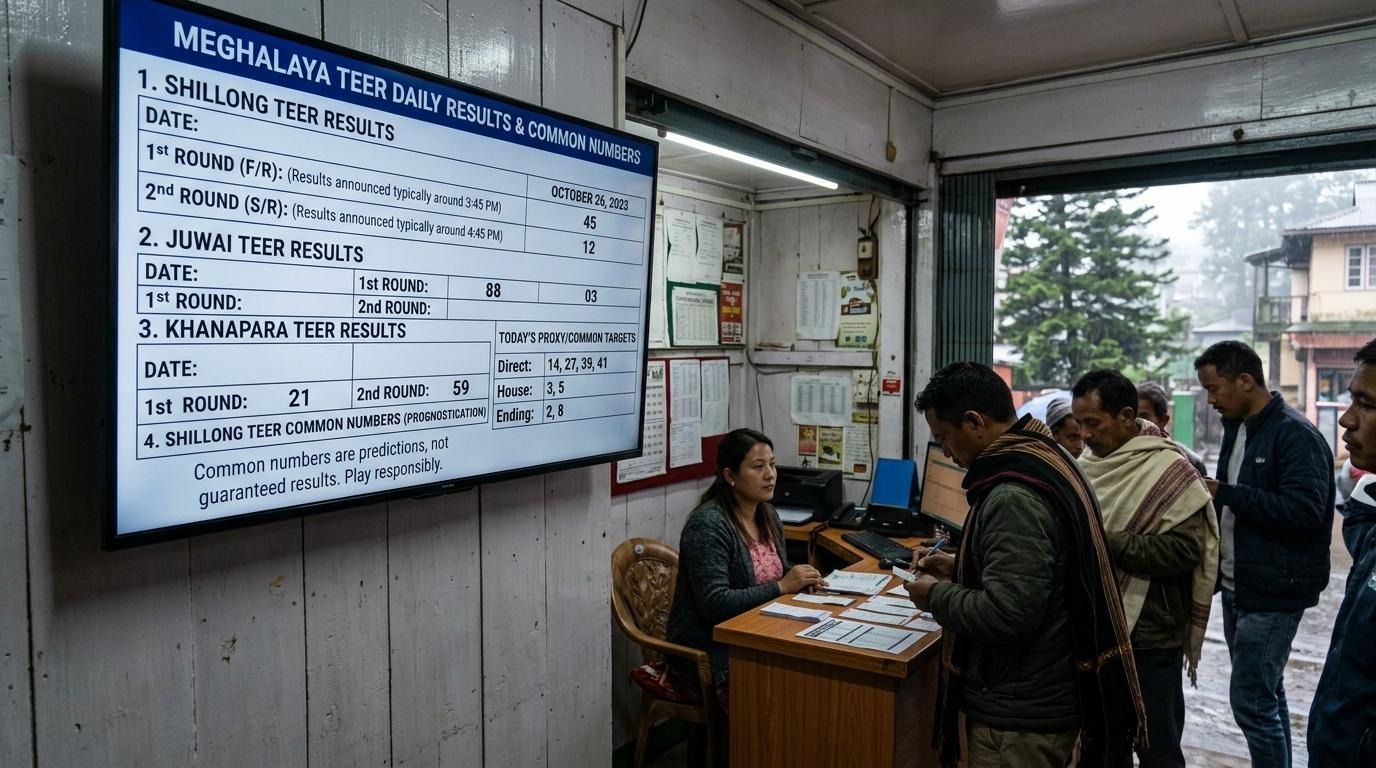
Nestled in the picturesque Khasi Hills of Meghalaya, India, Shillong is home to a rich cultural heritage where ancient tribal traditions seamlessly blend with modern social pastimes. Among these, Shillong Teer stands out as one of the most distinctive and legally recognized archery-based prediction games in Northeast India. Governed under the Meghalaya Amusements and Betting Tax Act, this game attracts thousands of participants daily who follow the live archery draws with immense enthusiasm.
Whether you are a seasoned follower tracking daily trends or a curious newcomer eager to learn how the game works, understanding the mechanics, rules, calculation formulas, and schedule behind the draws is essential.
What is Shillong Teer and How Does It Work?
Unlike standard computer-generated lotteries or random digital number draws, Shillong Teer is rooted entirely in physical skill and real-time athletic performance. Organized by the Khasi Hills Archery Sports Institute (K.H.A.S.I.), the game takes place at the famous Polo Ground in Shillong.
Every day (except Sundays), licensed archers belonging to various local archery clubs gather at the shooting arena. The game is conducted in two distinct rounds:
- First Round (F/R): A group of archers shoots a total of 30 arrows each at a cylindrical target made of woven bamboo within a set time frame.
- Second Round (S/R): In the subsequent round, archers release 20 arrows each at the target.
Once the shooting session concludes for a round, official referees collect and manually count every arrow that successfully hit the target in full view of spectators and officials.
How the Winning Number is Determined
The winning number for each round is calculated using a straightforward arithmetic rule based on the total arrow count.
Calculation Formula:
The official winning output is always the last two digits of the total number of arrows hitting the target.
Example: If archers successfully land 748 arrows in the target during the First Round, the winning number for F/R is 48. If 532 arrows hit the target in the Second Round, the winning number for S/R is 32.
This transparent and physical counting process ensures complete fairness, making the outcome dependent on atmospheric conditions, archers’ precision, and physical performance rather than automated algorithms. Staying updated with the daily shillong teer result allows enthusiasts to track official numbers as soon as referees complete the verification process.
Daily Schedule and Timings
Timing plays a crucial role in tracking Teer draws. While the primary Shillong Teer sessions take place in the afternoon, several other regional variations operate throughout the day to keep participants engaged across Northeast India.
| Game Name | First Round (F/R) Time | Second Round (S/R) Time | Operating Days |
|---|---|---|---|
| Shillong Morning Teer | 10:30 AM | 11:30 AM | Daily (Incl. Sundays) |
| Shillong Teer (Day) | 3:45 PM | 4:40 PM | Monday to Saturday |
| Khanapara Teer | 4:00 PM | 4:30 PM | Monday to Saturday |
| Juwai Teer | 2:00 PM | 2:30 PM | Monday to Saturday |
| Shillong Teer Night | 8:15 PM | 9:00 PM | Daily |
Note: Timings may occasionally adjust slightly based on official announcements from local sports authorities or weather conditions.
Understanding Teer Predictions: Charts, Common Numbers, and Dreams
A significant portion of the game’s allure lies in the traditional methodology participants use to select their predicted numbers (between 00 and 99).
1. Previous Results & Teer Charts
Many regular trackers analyze historical Teer Charts. By evaluating previous winning numbers over days, weeks, or months, followers identify patterns, repeated ending digits (known as House and Ending numbers), and frequency trends to inform their daily picks.
2. Common Numbers and Targets
“Common Numbers” or “Target Numbers” are calculated predictions shared daily by experienced analysts. These predictions are typically derived by comparing recent First Round and Second Round ratios, club performances, and statistical variations.
3. The Role of Dream Numbers
In Khasi tribal culture, dreams have long held deep symbolic value. Many enthusiasts interpret nighttime dreams to select their numbers for the next day’s draw:
- Dreaming of a snake: Frequently associated with number 7.
- Dreaming of water or rain: Often linked to numbers 01, 07, or 11.
- Dreaming of a man and woman: Symbolizes numbers 56 or 65.
- Dreaming of playing Teer: Believed to bring good fortune across any selected pair!
While these interpretations add a layer of cultural folklore and excitement, participants always remember that the final result remains purely an outcome of real-world archery precision.
Cultural Significance and Community Impact
Beyond numerical predictions, Teer serves as a vital economic driver and community gathering in Meghalaya. Thousands of official kiosks line streets like Police Bazaar in Shillong, generating direct employment for counter clerks, archers, and administrative staff.
Every afternoon, crowds gather around Furlong Polo Road to witness the live action. As archers release arrows in synchronized rhythm, the atmosphere builds into a thrilling spectacle of tradition, sport, and camaraderie.
Conclusion
Shillong Teer is far more than a simple game of chance—it is a living cultural tradition that highlights the rich archery heritage of the Khasi tribe. By combining physical skill, regulated governance, and structured counting systems, it offers a fascinating look into the social fabric of Meghalaya. Whether you are reviewing past charts, calculating target numbers, or following live announcements, understanding how the game functions adds even greater appreciation for this unique northeastern tradition.