





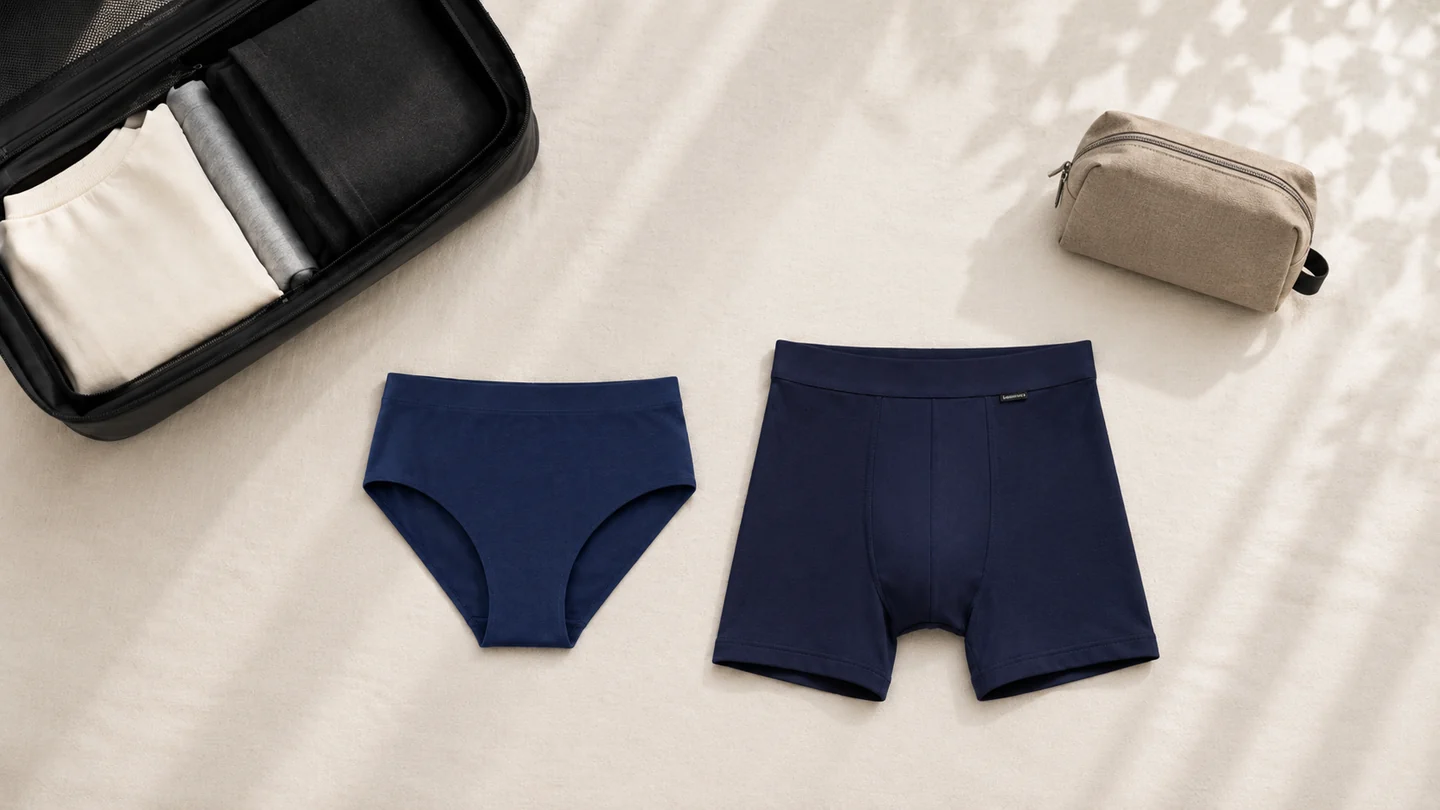
You’ve trusted merino wool for cold-weather trips. The merino wool vs cotton question hits differently when you sit at a desk or hit the gym. That itch you tolerate on the trail feels less noble during a long meeting.
This post walks you through real-world scenarios. You’ll see where merino earns its price and where cotton outperforms.
Where Merino Wins: The Winter Backpacking Scenario
You shoulder a pack in freezing rain. Your base layer gets soaked. Merino wool underwear keeps insulating even when wet. That matters when you need every degree.
Multi-day trips reward merino’s natural odor resistance. You can wear the same pair longer without smelling like a gym bag. For sleeping in a cold tent, the warmth-to-weight ratio delivers.
No synthetic wicking beats merino’s ability to feel dry against skin after hours under shell pants. This is where merino earns its premium. For a week in the backcountry, you cannot fault it.
Head-to-Head Comparison: Merino Wool vs Cotton Underwear
| Use Case | Merino Wool | Cotton |
|---|---|---|
| Warm Weather | Traps heat near skin. Overheats fast. | Breathes exceptionally. Wicks sweat in light activity. |
| Cold Wet Weather | Insulates when damp. Keeps core warm. | Loses all insulation. Chills skin rapidly. |
| Itch Factor | Even fine fibers scratch sensitive areas. Irritation increases with movement and heat. | Smooth flat fibers feel soft from day one. No prickle against groin skin. |
| Care | Requires hand washing or gentle cycles. Air-dry only. Shrinks and pills if machine-dried. | Machine wash and dry without special steps. Becomes softer over time. |
| Price | Two to three times more expensive per pair. | Budget-friendly. You can rotate seven pairs affordably. |
Where Cotton Wins: Gym, Office, and Summer
You pull on cotton boxer briefs for a July commute. The fabric breathes. It stays cool when you sweat. No swampy heat buildup.
At the gym, motion rubs fabric against your skin. Merino’s microscopic scales create friction. Cotton glides without chafing. After your workout, you toss the pair into a regular wash cycle. No special detergent needed. No air-drying rack required.
You sit through back-to-back meetings. Under your trousers, men’s organic cotton underwear keeps you dry and irritation-free. GOTS-certified organic cotton lacks the rough fiber ends that cause the infamous merino “wool tickle.” It meets a verified clean standard. No hormone-disrupting dyes or carcinogenic finishes touch your most sensitive skin.
Natural fiber underwear made from organic cotton also handles humidity better. It absorbs moisture without feeling clammy. Merino clings and starts to smell musty indoors. Cotton lets air move freely against your body. That keeps bacteria growth lower throughout a long office day.
For daily life, cotton costs a fraction of merino. You fill your drawer without emptying your wallet.
Buyer’s Checklist: Choosing Between Merino and Cotton by Use Case
For Multi-Day Backpacking
Merino wins here. Its wet-warmth and odor control justify the higher price and fussy laundry routine.
For Daily Office Wear
Cotton dominates. You stay cool, comfortable, and free from itch. Look for men’s organic cotton underwear with GOTS certification to avoid chemical residues.
For Gym and Workouts
Cotton again. It manages sweat for typical sessions. Merino’s irritation spikes when skin heats up and rubs. Cotton moves with you without stinging.
For Hot Summer Commutes
Breathable natural fiber underwear like organic cotton releases heat fast. Merino traps body warmth and becomes sticky in high humidity.
For Travel and Minimal Packing
Merino can work if you pack ultralight and hand-wash. For most trips, cotton’s easy care lets you rinse in a hotel sink and wear the next day. You save time and avoid the itch risk in unfamiliar climates.
For Skin Sensitivity
Cotton gives a soft, scale-free surface. Merino’s fiber structure remains problematic regardless of micron count. If you deal with eczema or chafing, stick with organic cotton.
Frequently Asked Questions
Does merino wool underwear really control odor better?
Yes, merino’s natural lanolin and fiber structure slow bacterial growth. This matters on multi-day hikes. For everyday use, regular washing with cotton achieves the same freshness without a premium price.
Can organic cotton handle sweat during a workout?
Absolutely. High-quality GOTS-certified cotton wicks moderate moisture and dries faster than you expect. It does not trap heat like merino. For intense gym sessions, cotton outperforms wool in comfort and temperature regulation.
Why does merino itch even though brands claim it doesn’t?
Merino fibers have microscopic scales that catch on skin. Heat and sweat amplify the scratching. Sensitive areas react quickly. Some men never adapt. Opok crafts organic cotton underwear without those scales, so you avoid that constant low-grade irritation.
How do I wash merino underwear to make it last?
Hand-wash in cold water with wool-specific soap. Roll in a towel to remove moisture. Lay flat to air-dry. Never machine-dry. Skipping those steps leads to shrinking and holes within months.
You still rely on merino for daily wear. That means you accept persistent itch, delicate laundry, and twice the price. You gamble your comfort on a story that belongs above treeline.
Cotton technology has not stood still. While you hand-wash merino in a bathroom sink, others toss their GOTS-certified organic cotton gear in the machine and move on with their day. They avoid fabric softeners because the cotton gets softer every wash on its own.
Your underwear should let you forget you are wearing it. Every day you ignore the friction and cost, you risk another bout of chafing or a mid-day adjustment. Merino’s alpine strengths become liabilities at street level.
Choose the fiber that matches your real life. The backcountry stays in your weekend pack. Your Monday-through-Friday demands a different material. Make the switch before another itchy afternoon reminds you.